In the last decade, the digital revolution has reshaped the way businesses operate, store, and secure their data. Among the most significant changes has been the transition from traditional IT infrastructure (on-premises servers, hardware, and in-house software management) to cloud computing. This shift is not just a passing trend but a global movement, as organizations realize the cost, scalability, and flexibility benefits of the cloud.
Understanding the difference between cloud computing and traditional IT is crucial for businesses making technology investments. Let’s explore both models in detail and understand why more companies are moving towards the cloud.
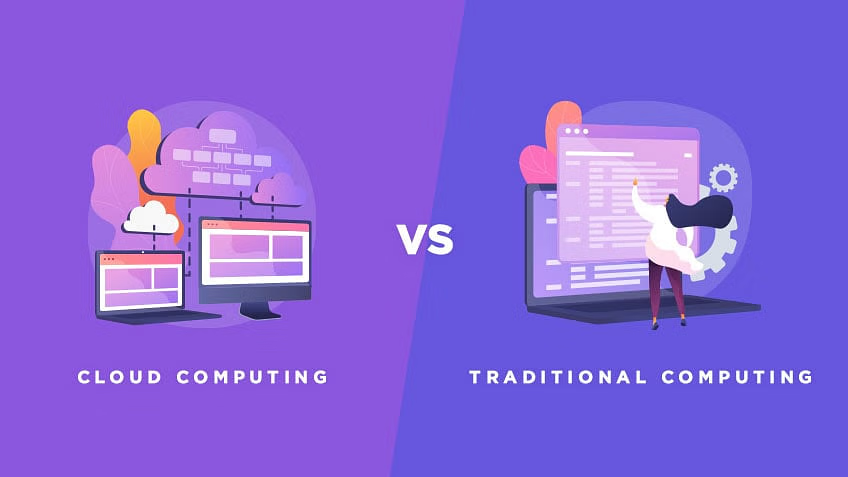
What is Traditional IT?
Traditional IT refers to a setup where organizations purchase, install, and maintain their own hardware, servers, storage devices, and software within physical data centers.
Key Features of Traditional IT:
- Ownership of Hardware & Software: Companies buy and own servers, storage, and networking equipment.
- On-Premises Management: Everything is managed and secured within company premises.
- High Upfront Investment: Capital expenditure (CAPEX) is significant, covering hardware purchase, setup, and maintenance.
- Dedicated IT Staff: Requires skilled teams for server management, updates, backups, and troubleshooting.
- Limited Scalability: Scaling resources requires purchasing additional hardware, which takes time and money.
- Long Deployment Time: Setting up infrastructure often takes weeks or months.
What is Cloud Computing?
Cloud computing provides on-demand access to computing resources such as servers, storage, databases, and applications via the internet. Instead of owning physical infrastructure, businesses “rent” resources from cloud service providers like Amazon Web Services (AWS), Microsoft Azure, and Google Cloud.
Key Features of Cloud Computing:
- Pay-as-You-Go Model: Operational expenditure (OPEX) with no heavy upfront costs.
- On-Demand Scalability: Instantly scale resources up or down depending on demand.
- Global Accessibility: Access applications and data from anywhere with an internet connection.
- High Availability: Cloud providers ensure uptime through redundant servers and global data centers.
- Automatic Updates & Maintenance: Providers manage software patches, updates, and security.
- Disaster Recovery & Backup: Built-in backup and recovery options reduce downtime.
Cloud vs Traditional IT – A Detailed Comparison
| Feature | Traditional IT | Cloud Computing |
|---|---|---|
| Cost | High upfront CAPEX, ongoing maintenance | Low upfront, pay-as-you-go OPEX |
| Scalability | Limited, requires hardware purchases | Elastic, scale up/down instantly |
| Deployment Speed | Weeks or months | Minutes or hours |
| Accessibility | On-premises only | Anywhere via internet |
| Maintenance | In-house IT staff required | Managed by cloud providers |
| Security | Controlled internally | Shared responsibility with provider |
| Disaster Recovery | Complex and costly | Integrated, cost-effective solutions |
| Innovation | Slower, hardware-bound | Faster, AI & big data ready |
Why Businesses Are Shifting to the Cloud
- Cost Efficiency
Businesses reduce upfront investments and convert IT spending into flexible operational costs. - Scalability and Flexibility
Companies can adjust resources instantly based on traffic, seasonal demand, or growth. - Faster Deployment
Cloud solutions can be deployed in hours instead of months, accelerating digital transformation. - Enhanced Collaboration
Teams can work remotely, accessing files and tools from anywhere in the world. - Stronger Security Measures
Top providers offer enterprise-grade encryption, firewalls, and compliance certifications. - Business Continuity
Cloud backup and disaster recovery minimize downtime and data loss. - Access to Innovation
Businesses can integrate emerging technologies like Artificial Intelligence, Big Data, and IoT seamlessly.

Real-World Applications of Cloud Adoption
- Startups: Avoid heavy investment, scale quickly.
- E-commerce: Manage seasonal traffic surges.
- Healthcare: Secure patient data and enable telemedicine.
- Banking & Finance: Real-time fraud detection, secure transactions.
- Education: E-learning platforms, remote classrooms.
Challenges of Cloud Computing
While cloud adoption is accelerating, some challenges remain:
- Data Security Concerns: Storing sensitive data off-premises raises compliance issues.
- Vendor Lock-in: Businesses may struggle to switch providers once integrated.
- Internet Dependence: Reliable, high-speed connectivity is crucial.
Conclusion
The choice between traditional IT and cloud computing depends on a business’s size, goals, and industry requirements. However, the shift towards cloud computing is undeniable. It offers cost savings, agility, security, and innovation opportunities that traditional IT struggles to match.
For businesses seeking to stay competitive in today’s fast-paced digital economy, the cloud is not just an option—it is the future.